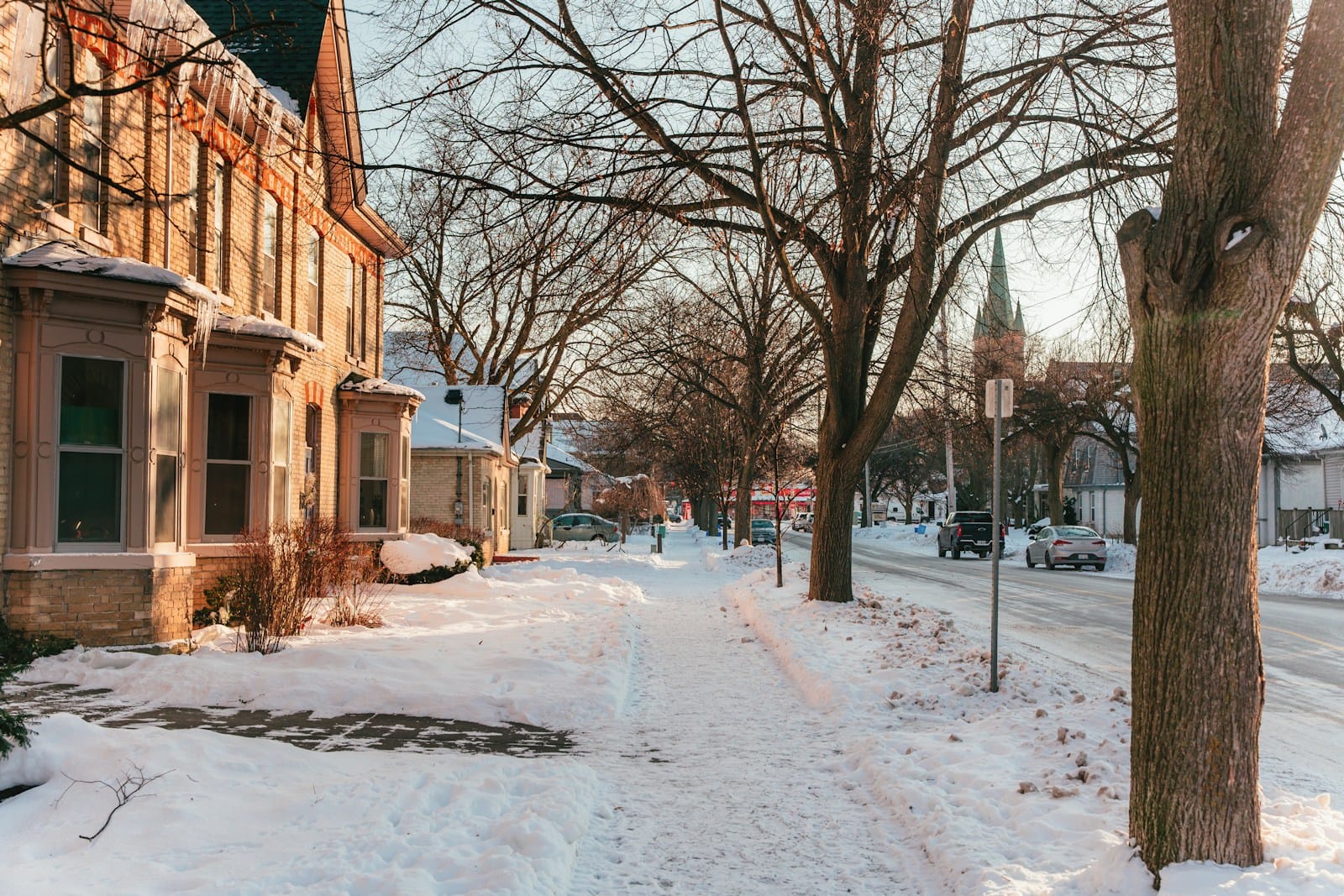
Ice dams form when snow on a warm roof melts and refreezes at the cold edge, backing water up under the shingles. In Northeast Ohio, prevention starts with clean gutters and downspouts before winter, then good attic insulation and ventilation, and safely removing heavy snow from the roof edge after big storms.
Those big icicles hanging off the gutters look nice, but they're often a sign of an ice dam, and ice dams can push water into ceilings and walls.
How ice dams form
Heat escaping from the house warms the upper roof, and the snow there melts. The meltwater runs down to the colder roof edge and refreezes. That ridge of ice keeps growing, and water pools behind it and works its way under the shingles.
Warning signs
- Thick icicles along the gutters
- Ice building up at the roof edge
- Water stains on ceilings or exterior walls after a thaw
- Gutters pulling away under the weight of ice
How to prevent them
- Clean gutters and downspouts in late fall. Clogged gutters hold water and ice right at the roof edge. Here's when to clean them.
- Improve attic insulation and ventilation. A cold roof deck means less melting. A roofer or insulation contractor can assess this.
- Remove heavy roof-edge snow after big storms with a roof rake from the ground. Never from a ladder on ice.
- Keep downspouts clear so meltwater can actually drain away.
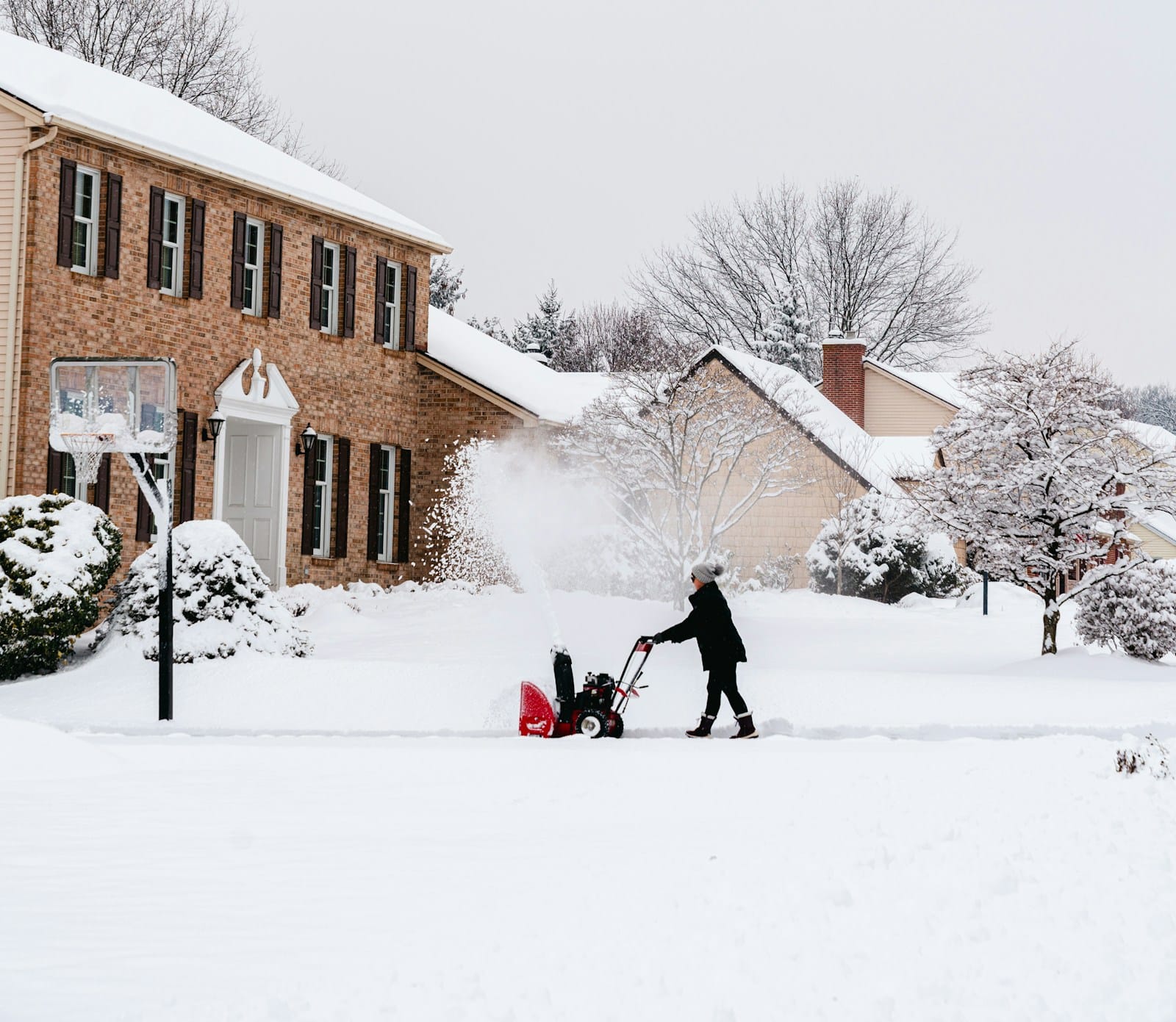
Get your gutters cleaned before the freeze. See gutter cleaning. And for the driveway, our snow removal service has you covered.
FAQ
Do clean gutters prevent ice dams?
They help a lot. Clean gutters let meltwater drain instead of freezing at the edge. Insulation and ventilation matter too.
Should I chip ice off my roof?
No. Chipping can damage shingles and is dangerous. Call a roofing professional for serious ice dams.
DK Outdoor Services has been serving Brunswick, Medina County and Northeast Ohio since 2022. Free estimates.
Written by the DK Outdoor Services team in Brunswick, Ohio. Licensed & insured · Est. 2022.